Volcano Theatre & 662 OVA: Waiting for Godot – Inuktitut
FIRST PERMANENT BOARD OF DIRECTORS – UPDATE
Presenting our first permanent Board of Directors:
Throughout 2020, based on the recommendations in the Sixties Scoop Healing Foundation Survivor Engagement Report, we recruited the first permanent Survivor-led Board of Directors for the Sixties Scoop Healing Foundation. Our first official Board of Directors represent compassion, strength, unity and healing.
Throughout 2020, based on the recommendations in the Sixties Scoop Healing Foundation Survivor Engagement Report, we recruited the first permanent Survivor-led Board of Directors for the Sixties Scoop Healing Foundation. Our first official Board of Directors represent compassion, strength, unity and healing.
November 12, 2020 Virtual Event
Official Launch of the Sixties Scoop Healing Foundation and Board of Directors Announcement. Captions in French and English will be provided in the future, but for now, the video is available for viewing in its entirety.
Official Launch of the Sixties Scoop Healing Foundation and Board of Directors Announcement. Captions in French and English will be provided in the future, but for now, the video is available for viewing in its entirety.
Carolyn Bennett
Minister of Crown-Indigenous Relations
Minister Bennett shares remarks on the new permanent Board Members of the Sixties Scoop Healing Foundation and their vital work to address the legacy of the Sixties Scoop.
Minister of Crown-Indigenous Relations
Minister Bennett shares remarks on the new permanent Board Members of the Sixties Scoop Healing Foundation and their vital work to address the legacy of the Sixties Scoop.
Ontario Akwesasne, March 18, 2025
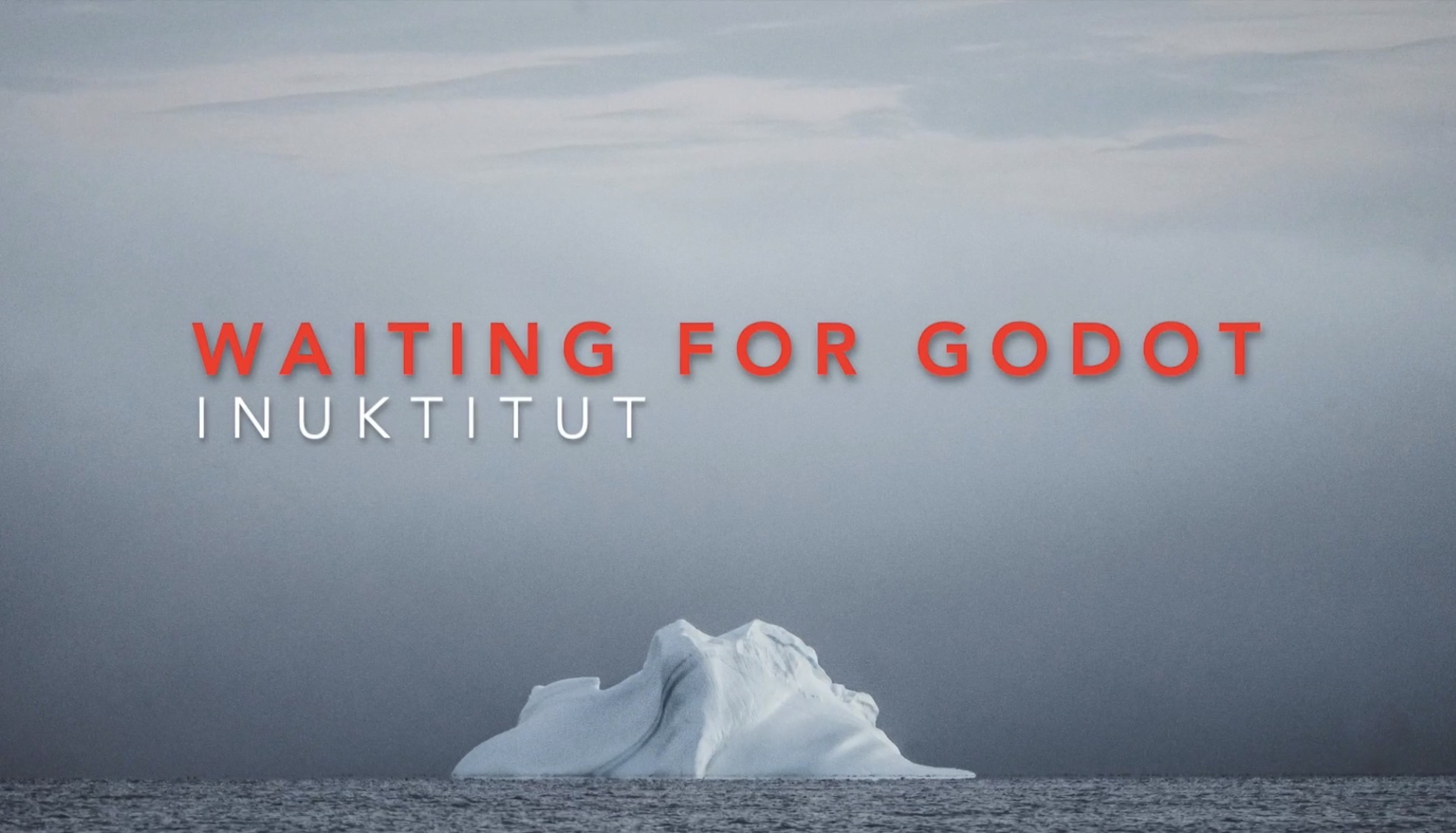
A landmark theatrical collaboration is bringing new life and new language to one of the most recognized works of modern drama. Waiting for Godot – Inuktitut is a bold reimagining of Samual Beckett’s Waiting for Godot, translated and transformed through Inuit voice, experience, and cultural perspective.

This project is co-produced by Volcano Theatre and 662 OVA, an Iqaluit-based collective founded and led by Sixties Scoop Survivor Tatanniq Lucie Idlout. While Volcano serves as the charitable partner and project manager, the artistic vision is driven by Idlout and 662 OVA. During the project’s development, Idlout was invited to become an Associate Artist with Volcano strengthening an ongoing relationship grounded in collaboration and respect for artistic sovereignty.

Reclaiming Language, Reclaiming Voice
At its core, Waiting for Godot – Inuktitut is a language reclamation project.
For many Inuit affected by the Sixties Scoop and other colonial policies, language disruption represents a profound rupture in identity and belonging. This production places Inuktitut at the centre both as artistic medium and as a pathway toward healing.
Funding from the National Sixties Scoop Healing Foundation of Canada will support three key components:
1. Language reclamation and dialect coaching for the cast over six months, including a one-week dialect intensive in Igloolik.
2. A three-week production and design workshop in Ottawa, in partnership with the NAC Indigenous Theatre and the Great Canadian Theatre Company, focused on costuming, set, and performance development.
3. An Ottawa Inuit community celebration, feast, and viewing of the play, ensuring the work is shared first and foremost with Inuit audiences.
2. A three-week production and design workshop in Ottawa, in partnership with the NAC Indigenous Theatre and the Great Canadian Theatre Company, focused on costuming, set, and performance development.
3. An Ottawa Inuit community celebration, feast, and viewing of the play, ensuring the work is shared first and foremost with Inuit audiences.
View the promotinal video here: https://www.volcano.ca/waiting-for-godot-inuktitut
Through this process, the production becomes more than a translation it becomes a cultural intervention. By recontextualizing Beckett’s meditation on waiting, endurance, and uncertainty, the play speaks to the lived realities of Inuit within Canada while affirming humour, resilience, and boldness.
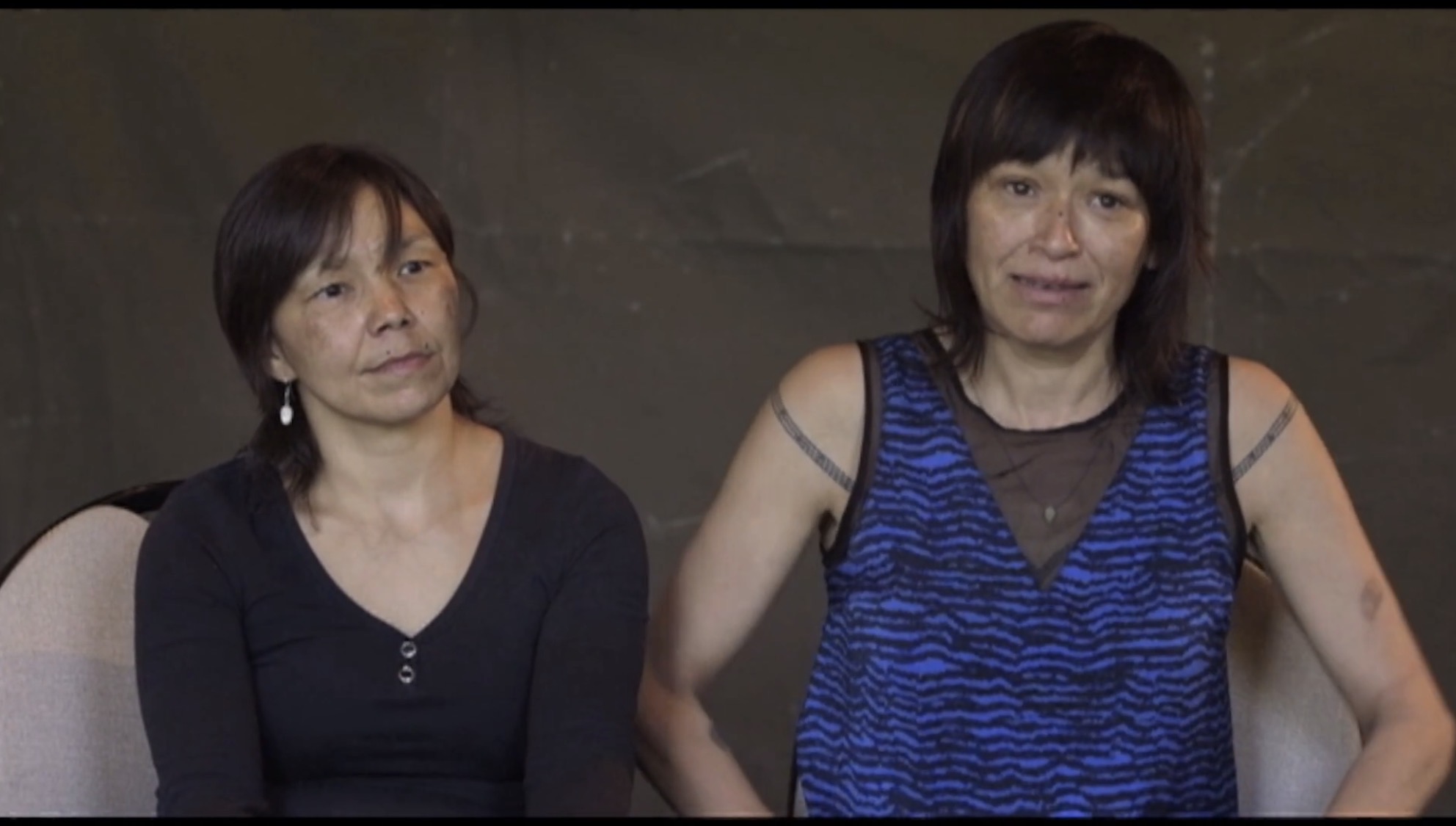
Left to right: Co-translator Carol Kunnuk and Project Lead Tatanniq Idlout
Art as Cultural Education and Healing
662 OVA was founded to centre Inuit voices through performance and storytelling. Its mission is rooted inevoking empathy while providing cultural education about Inuit experiences through Inuktitut language, humour, and unapologetic presence.

Volcano Theatre, recognized internationally for collaborative live-performance creation, supports the project’s development infrastructure while respecting the autonomy of Inuit artistic leadership. This co-production model ensures both professional production capacity and cultural integrity.
https://www.volcano.ca/waiting-for-godot-inuktitut
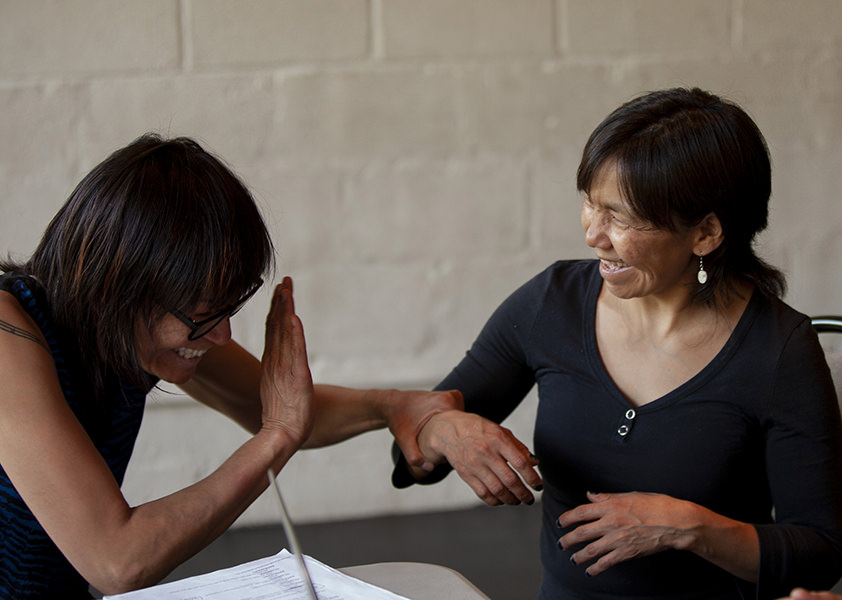
Left to right: Projecct Lead Tatanniq Idlout and Co-translator Carol Kunnuk. Photo: John Lauener
For Tatanniq Lucie Idlout, the journey is deeply personal:
“To be able to tell this story in my language will be a milestone in my life, and one that has taken me a lot of courage to take on… It’s not just a play; it’s a journey.”
More Than a Performance
Waiting for Godot – Inuktitut stands as a testament to the power of language reclamation, artistic sovereignty, and community celebration. By placing Inuktitut at the center of a globally recognized work, this project affirms that Indigenous languages are not relics they are living, evolving vessels of story, resistance, and healing.
Through collaboration, courage, and cultural pride, this production invites audiences into something larger than theatre: a shared journey toward reconnection and possibility.
For Tatanniq Lucie Idlout, the journey is deeply personal:
“To be able to tell this story in my language will be a milestone in my life, and one that has taken me a lot of courage to take on… It’s not just a play; it’s a journey.”
More Than a Performance
Waiting for Godot – Inuktitut stands as a testament to the power of language reclamation, artistic sovereignty, and community celebration. By placing Inuktitut at the center of a globally recognized work, this project affirms that Indigenous languages are not relics they are living, evolving vessels of story, resistance, and healing.
Through collaboration, courage, and cultural pride, this production invites audiences into something larger than theatre: a shared journey toward reconnection and possibility.
.png)
For more information on the National Sixties Scoop Healing Foundation of Canada, please visit our website here: https://www.sixtiesscoophealingfoundation.ca/
For more information on the National Sixties Scoop Healing Foundation of Canada, please visit our website here: https://www.sixtiesscoophealingfoundation.ca/