The Board of Directors’ Participation at the Assembly of First Nations Annual General Assembly in Winnipeg
FIRST PERMANENT BOARD OF DIRECTORS – UPDATE
Presenting our first permanent Board of Directors:
Throughout 2020, based on the recommendations in the Sixties Scoop Healing Foundation Survivor Engagement Report, we recruited the first permanent Survivor-led Board of Directors for the Sixties Scoop Healing Foundation. Our first official Board of Directors represent compassion, strength, unity and healing.
Throughout 2020, based on the recommendations in the Sixties Scoop Healing Foundation Survivor Engagement Report, we recruited the first permanent Survivor-led Board of Directors for the Sixties Scoop Healing Foundation. Our first official Board of Directors represent compassion, strength, unity and healing.
November 12, 2020 Virtual Event
Official Launch of the Sixties Scoop Healing Foundation and Board of Directors Announcement. Captions in French and English will be provided in the future, but for now, the video is available for viewing in its entirety.
Official Launch of the Sixties Scoop Healing Foundation and Board of Directors Announcement. Captions in French and English will be provided in the future, but for now, the video is available for viewing in its entirety.
Carolyn Bennett
Minister of Crown-Indigenous Relations
Minister Bennett shares remarks on the new permanent Board Members of the Sixties Scoop Healing Foundation and their vital work to address the legacy of the Sixties Scoop.
Minister of Crown-Indigenous Relations
Minister Bennett shares remarks on the new permanent Board Members of the Sixties Scoop Healing Foundation and their vital work to address the legacy of the Sixties Scoop.
Ontario Akwesasne, January 8, 2026
Last year, members of the National Sixties Scoop Healing Foundation of Canada’s Board of Directors travelled to Winnipeg, Manitoba, to attend the Assembly of First Nations (AFN) Annual General Assembly (AGA). The AFN AGA is one of the most significant national gatherings of First Nations leadership, bringing together Chiefs, delegates, Elders, youth, and organizations from across the country to engage in dialogue, education, and collective action on issues of national importance.
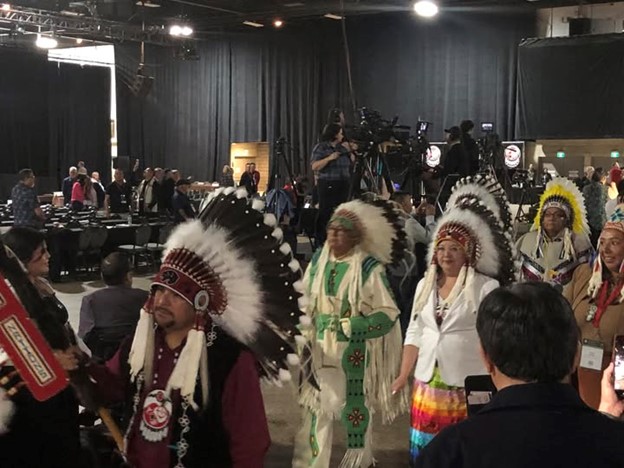
Assembly of First Nations (AFN) Annual General Assembly(AGA) Day one entry with Grand Chief Cindy Woodhouse Nepinak.
Photo Credit: Chris Wagg
Photo Credit: Chris Wagg
The Foundation’s presence at the AGA reflected its ongoing commitment to relationship-building, accountability, and education on behalf of Sixties Scoop Survivors, their families, and descendants. Attending the Assembly provided an important opportunity for the Board to listen, learn, and engage directly with First Nations leadership and community representatives on issues that intersect with the legacy of the Sixties Scoop, including child welfare reform, healing, reconciliation, and Indigenous self-determination.
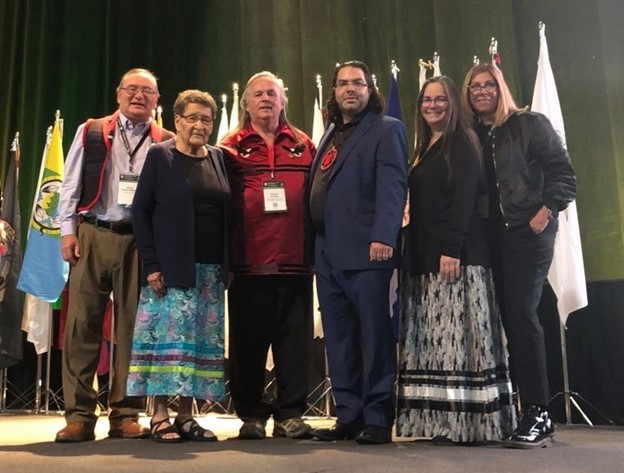
(From Left to right: CEO of the NSSCHF Wayne Garnons-Williams, National Sixties Scoop Mother Elder Philomene Sanderson, Kukpi7 (Chief) Michael Christian, Board Treasurer Troy MacBeth Abromaitis, Board Secretary Mary John, Board Member Chris Wagg.)
Photo Credit: Chris Wagg
Photo Credit: Chris Wagg
Throughout the Assembly, Board members participated informal sessions, working discussions, and informal exchanges that deepened their understanding of both regional and national perspectives. These engagements helped strengthen relationships with First Nations communities and partners, while reinforcing the Foundation’s role as a survivor-informed, Indigenous-led organization grounded in collaboration, respect, and shared responsibility.
A deeply significant moment during the Assembly was the presence and leadership of Elder Philomene Sanderson, the National Sixties Scoop Mother. Elder Sanderson spoke directly with National Chief Cindy Woodhouse Nepinak. Her presence grounded the Foundation’s education in ceremony, truth, and lived reality, reminding leadership that the impacts of the Sixties Scoop are not historical—they are ongoing.
A deeply significant moment during the Assembly was the presence and leadership of Elder Philomene Sanderson, the National Sixties Scoop Mother. Elder Sanderson spoke directly with National Chief Cindy Woodhouse Nepinak. Her presence grounded the Foundation’s education in ceremony, truth, and lived reality, reminding leadership that the impacts of the Sixties Scoop are not historical—they are ongoing.

(From Left to right: National Sixties Scoop Mother Elder Philomene Sanderson with Grand Chief Cindy Woodhouse Nepinak)
Photo Credit: Wayne Garnons-Williams
Photo Credit: Wayne Garnons-Williams
A key education effort at the Assembly was the tabling of Draft Resolution #18/2025: Support for a National Day for Indigenous Child Removal Survivors, focused on the Sixties Scoop. The resolution was moved by Kukpi7 (Chief) Michael Christian of Splatsin First Nation (British Columbia) and seconded by Chief Pamela Robertson of Boston Bar First Nation. The resolution is grounded in the lived experience and advocacy of Troy MacBeth Abromaitis, whose leadership has already resulted in formal provincial proclamations recognizing June 30 as a day to honour Survivors of Indigenous child removal systems — including the Sixties Scoop, Millennium Scoop, foster care, and birth alerts — in British Columbia, Nova Scotia, and New Brunswick.

(From Left to right: Kukpi7 (Chief) Michael Christian and Troy MacBeth Abromaitis)
Photo Credit: Wayne Garnons-Williams
Photo Credit: Wayne Garnons-Williams
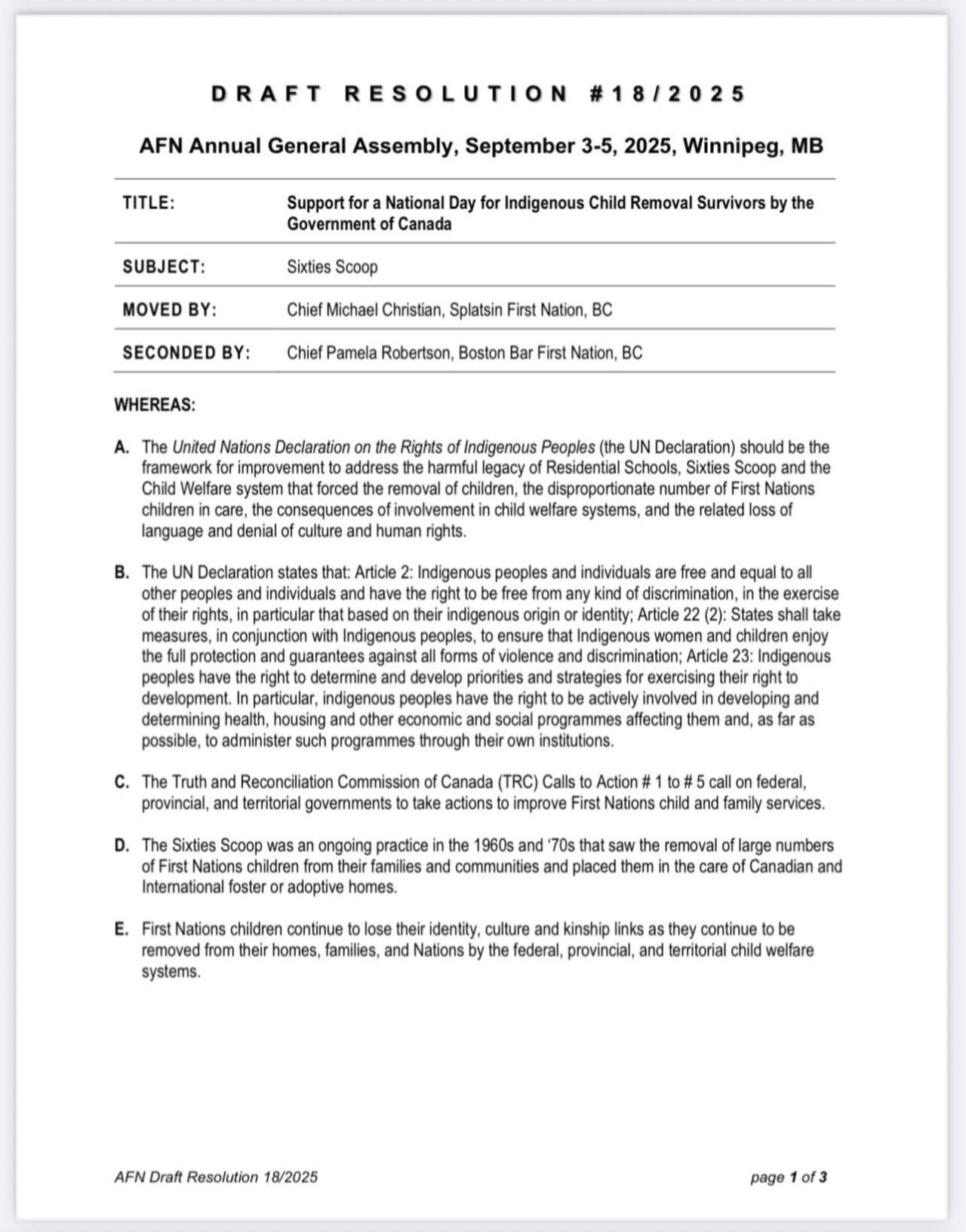
While the resolution was formally tabled, it was not read into session or debated due to time constraints. As the Assembly concluded, over 40 resolutions remained unaddressed, including this one. Although disappointing, this outcome highlighted the ongoing challenge of ensuring Survivor-focused issues receive the dedicated time and space they deserve within national forums. The resolution was later carried forward for further consideration at the AFN Special Chiefs Assembly in December 2025.
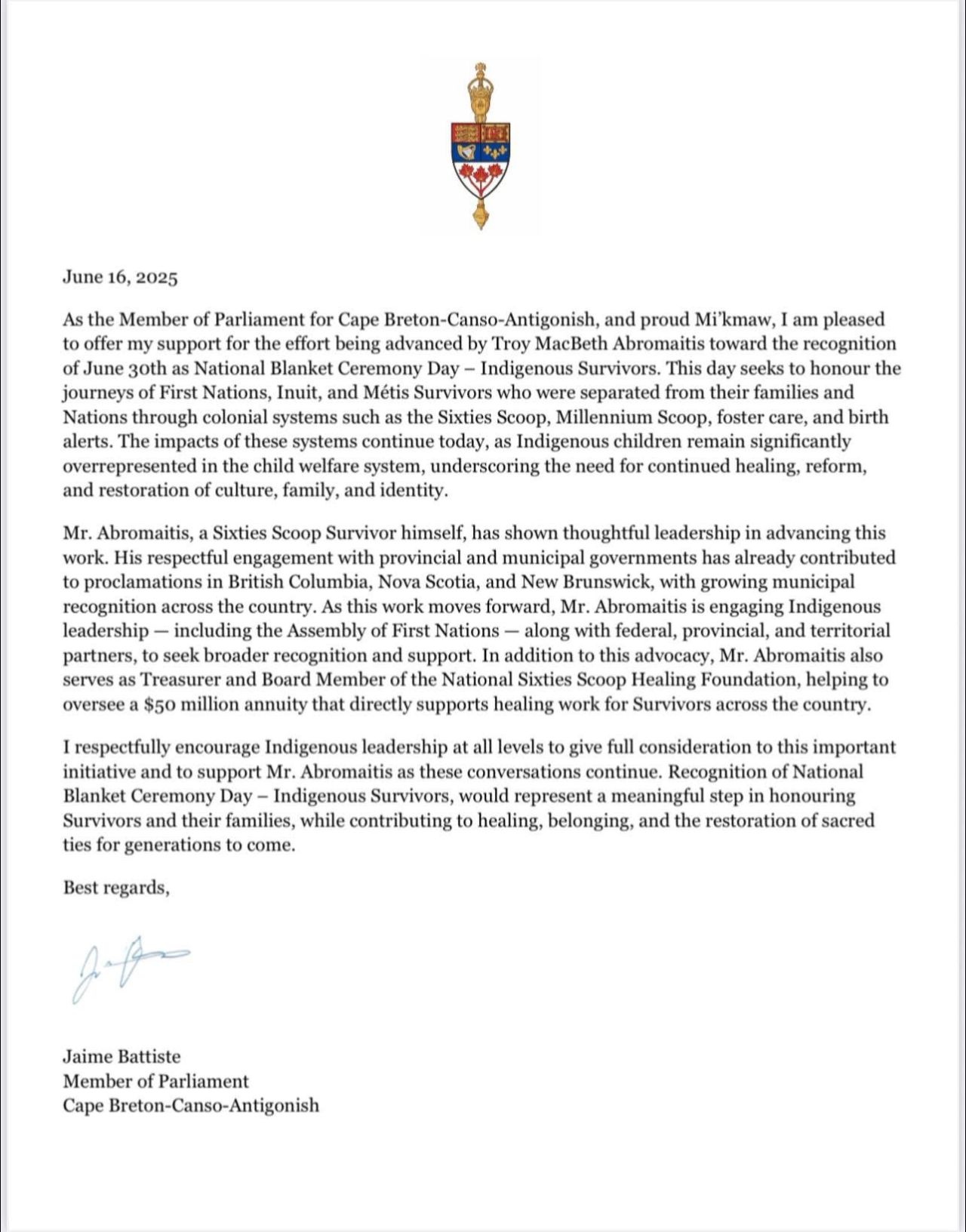
Photo Credit: Troy MacBeth Abromaitis
Being present at the AFN AGA also allowed the Board to elevate awareness of the Foundation’s mandate and work, share insights rooted in Survivor experiences, and remain engaged in broader national conversations affecting Indigenous children, families, and future generations. These spaces are critical to ensuring that the voices of Sixties Scoop Survivors continue to be seen, heard, and reflected within policy, education, and healing frameworks.
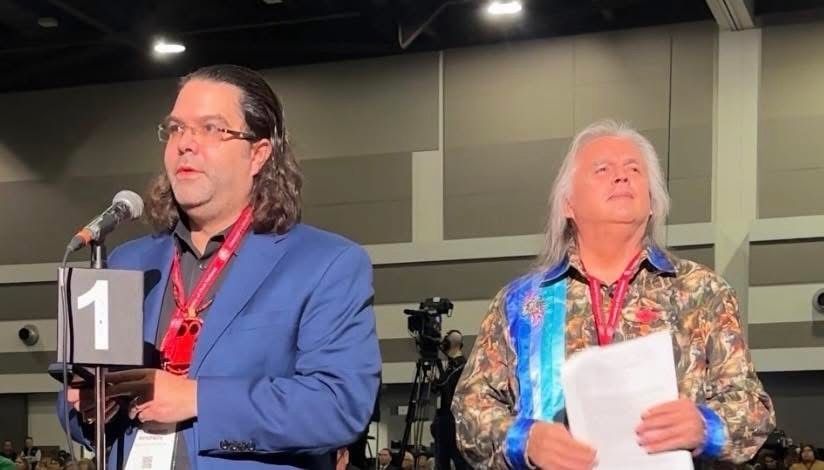
(From Left to right: Troy MacBeth Abromaitis and Kukpi7(Chief) Michael Christian
Photo Credit: Chris Wagg
Photo Credit: Chris Wagg
The Board’s participation in the AFN Annual General Assembly underscores the Foundation’s commitment to walking alongside First Nations leadership and communities, fostering meaningful relationships, and contributing to collective efforts toward healing, justice, and systemic change. Engagement at gatherings such as the AGA continues to inform the Foundation’s governance, strategic direction, and education work as it supports Survivors and advances healing across generations.
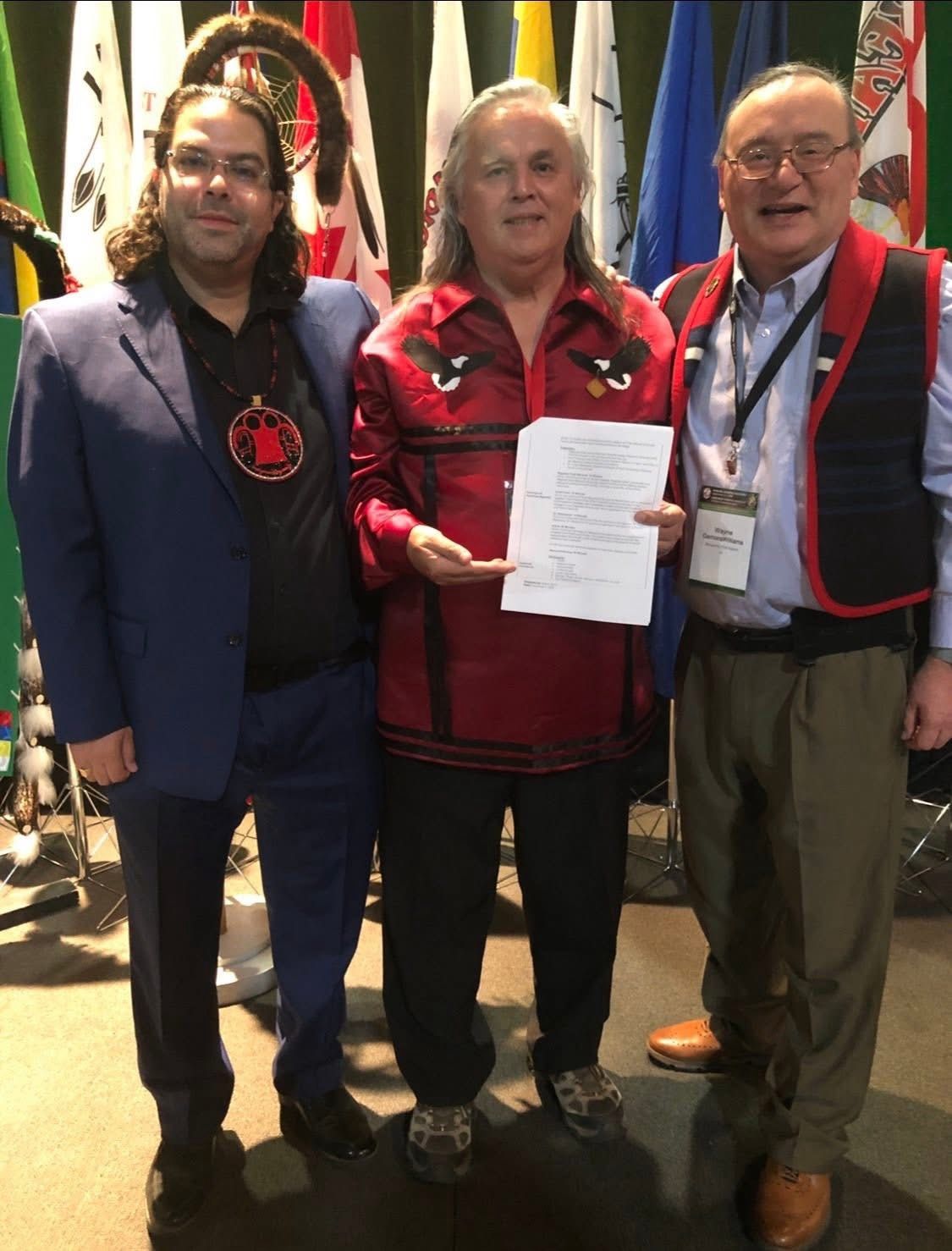
(From Left to right Troy MacBeth Abromaitis, Kukpi7 (Chief)Michael Christian, Chief Executive Officer of the NSSHFC Wayne Garnons-Williams
Photo Credit: Chris Wagg
Photo Credit: Chris Wagg
.png)
For more information on the National Sixties Scoop Healing Foundation of Canada, please visit our website here: https://www.sixtiesscoophealingfoundation.ca/