A Gathering of Truth, Healing, and Shared Responsibility: Reflections on the NSSHFC’s Second Annual Colloquium 

Akwesasne, Ontario, February 11, 2025

The National Sixties Scoop Healing Foundation of Canada (NSSHFC) with Library and Archives Canada, and the University of Manitoba have successfully convened its Second Annual National Sixties Scoop Archive Colloquium, bringing together Survivors, Elders, knowledge keepers, scholars, archivists, advocates, and allies for a powerful day of dialogue, reflection, and collective learning.

The National Sixties Scoop Healing Foundation of Canada supports healing, truth, and justice forSixties Scoop Survivors, their families, and future generations throughSurvivor-led and culturally grounded approaches. The Foundation delivers its mandate through three core pillars: an Annual Grants Program that funds Indigenous-led organizations providing trauma-informed healing, cultural reconnection, and family reunification services; the National Sixties Scoop Healing Archive, which preserves Survivor stories and records to ensure the truth of the Sixties Scoop is never erased; and national and international education and advocacy advancing Indigenous children’s rights and preventing future harms. 

Central to this mandate is creating Survivor-centred spaces where difficult histories can be addressed honestly, respectfully, and without dilution spaces where knowledge is shared with Survivors, not merely about them. Together, these planning and professional archivists efforts ensure Sixties Scoop Survivors will be supported in a professionally designed archive where, their truths are preserved, and their experiences shape a morejust future.

A colloquium differs fundamentally from a conference. When one compares Colloquium vs Conference, the main contrast comes down to size and focus. A colloquium is small, usually centered on a single subject, with close discussion and debate amongst leading experts in the field of study. A conference, on the other hand, is larger, multi-themed, and often designed for wide networking and knowledge sharing. The greater purpose of this Colloquium is not consensus, but understanding, accountability, and shared learning grounded in Survivor truths. Rather than prioritizing presentations, panels, or transactional knowledge exchange, a colloquium is intentionally designed for deep dialogue, reflection, and relational learning. It invites participants to listen as much as they speak, to sit with complexity, and to engage across lived experience, professional practice, and intergenerational knowledge.
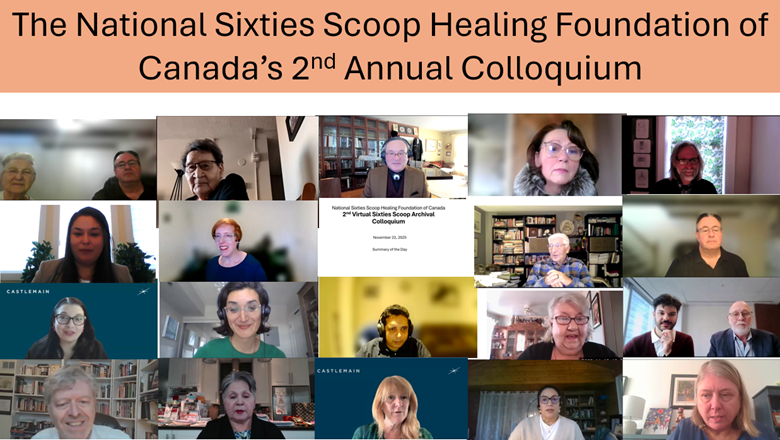

Building on the momentum of the inaugural gathering, this year’s Colloquium created a dedicated space to explore how truth, memory, and healing intersect particularly through archives, records, and lived experience. Participants engaged in thoughtful discussionson the role of records as both evidence and inheritance, the importance of safeguarding sacred documents, and the responsibility of archives to combat denialism while honouring Survivor truths.

Central to the Colloquium were personal stories and lived narratives, reminding all present that behind every record is a human life, a family, and a community impacted by the Sixties Scoop. These narratives reinforced a critical truth: archives are not neutral, and records alone cannot tell the full story without the voices of those who lived it. Speakers and participants also highlighted those who have fallen through the cracks of systems, reinforcing the urgent need for Survivor-centred approaches that address gaps in recognition, access, and healing supports. 

What makes the foundation’s annual Colloquium unique is that it intentionally amplifies First Nations, Métis, and Inuit perspectives, recognizing the distinct experiences of each while emphasizing shared responsibilities for truth-telling and accountability. Discussions also situates the Sixties Scoop within broader global contexts, drawing parallels to international histories of stolen Indigenous children and examining how current global events continue to shape Indigenous human rights conversations.

A key outcome of the day was a strengthened sense of collective purpose. The Colloquium reaffirmed the importance of intergenerational knowledge-sharing treating records and stories as gifts passed forward and underscored the role of advocacy and awareness inensuring Survivors are neither erased nor forgotten. 

The success of the Second Annual Colloquium reflects the growing commitment of Survivors and partners to confront difficult truths with courage, compassion, and integrity. The National Sixties Scoop Healing Foundation of Canada extends its deep gratitude to all participants, speakers, and Elders who contributed their time, knowledge, and lived experience. As the Foundation looks ahead, the insights and relationships formed during this Colloquium will continue to inform its work—strengthening healing initiatives, advancing truth, and honouring the voices of Sixties Scoop Survivors across generations.


To learn more about the work of the National Sixties Scoop Healing Foundation of Canada please visit www.sixtiesscoophealingfoundation.ca or follow us on social media